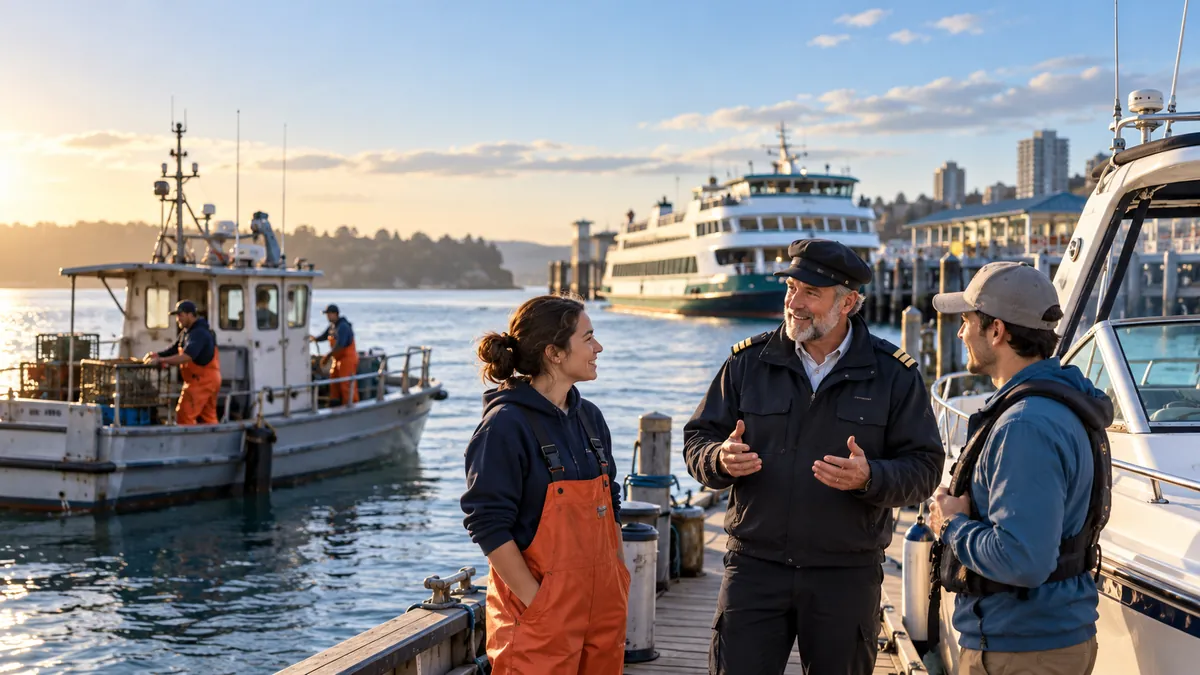
Explore maritime work, put your boating experience to use, or move forward in your career—with practical guidance from Captain Mike.
Pick the one that sounds most like you. You don’t need to know any credential names yet.
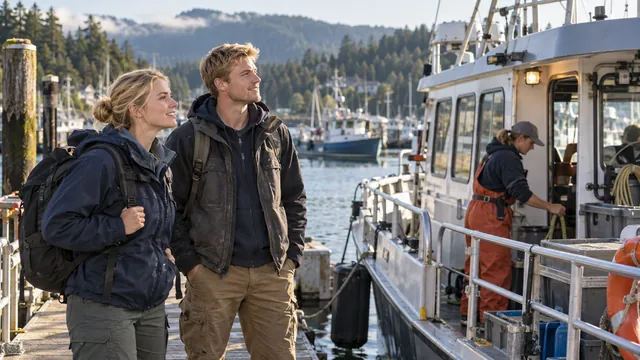
Never worked on a boat or ship? See the entry-level jobs on deck, in the engine room and in the galley, what the work is really like, and the paperwork you need before you can be hired.
Also: Get Your First Maritime Job · Joining Your First Vessel · Before You Spend Money
Start Here →
Already working aboard? See how people move from Ordinary Seafarer to Able Seafarer (AB), from AB toward mate, and from Wiper to QMED (Qualified Member of the Engine Department), and what each step takes.
Routes: OS to AB · AB to Third Mate · Wiper to QMED · Tank Vessel-PIC
See How People Move Up →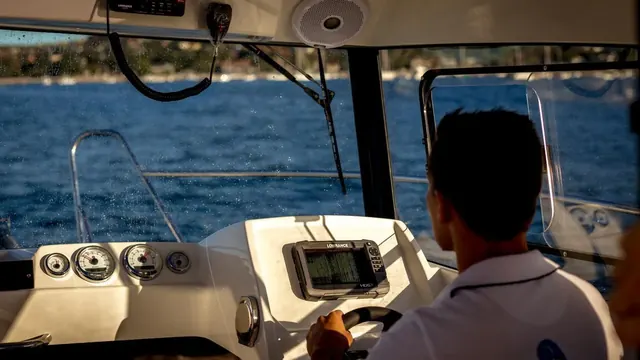
Thinking about fishing or sailing charters, water taxis, tour boats or part-time captain work? Find out whether your documented time on the water may count toward a captain’s license, and what else it takes.
Also: OUPV / Six-Pack · Master 100 Ton · Charter & small-boat employers
Does My Boating Time Count? →These are places to start exploring, not a test. Many jobs mix more than one.
Other ways in: Coming from the military · Maritime academies · Already licensed? Officer upgrades · Working ashore
Official Coast Guard, NMC, training, regulations, weather, charts and career resources — with a short explanation of when to use each one.
View Maritime Websites →Not sure yet? Start with the work that interests you. We'll show you who works aboard and which credentials get you there.
Explore maritime employers, union hiring halls, and official career pages—from entry-level opportunities to experienced maritime positions.
Often overlooked: ferry operators and oil spill response organizations.
A guide to employers and where they hire, not a list of current openings. Get the free printable directory ↓
Sea service is where most applications stall. Use these before you send anything to the NMC. They're planning aids, not official determinations.
This estimate counts each day once. Don’t assume 1½ days. That credit applies only on vessels the Coast Guard has authorized to run a two-watch system, and your sea-service letter must show it. What counts →

I struggled in high school, then did well at maritime college once the learning became practical and connected to work I understood. I graduated with a Third Mate license, worked offshore crew boats in the Gulf of America (formerly the Gulf of Mexico), then took an AB job when officer jobs were scarce. I later joined Exxon as Third Mate, and became a tanker captain seven years later.
I spent five decades going to sea and years after that in the classroom, teaching Chief Mate to Master, Tankerman-PIC and Able Seafarer. I've watched good mariners lose months to a sea-service letter that didn't say the right thing, or an upgrade path nobody explained to them.
Every guide here starts from the credential and works backward, cites the regulation and NMC checklist it comes from so you can check my work, and ends with a "traps" section built from the mistakes I've seen most often.
Enough days is only part of the answer. Check what your sea time qualifies you for, and that you can prove it, before you pay for an upgrade.
Read the column → CFR DEMYSTIFIEDLearn which neighborhood of the regulations an answer lives in before you start flipping pages.
Read the guide →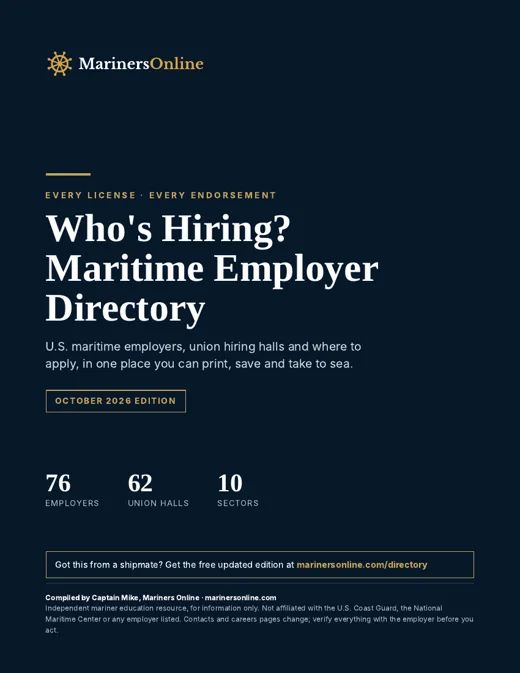 FREE DOWNLOAD · OCTOBER 2026 EDITION
76 maritime employers and 62 union hiring halls in one printable PDF: phone numbers, careers pages, a hall map and job call times. Free when you join From the Bridge, Captain Mike's monthly email: rule changes, sea-time tips and new guides, in plain English. One email a month. Unsubscribe anytime.
Sent with Kit. Your email is used only for the directory and this monthly note. See the Privacy Policy.
